

For decades, organisations have pursued a simple goal: make work easier.
And by easier, they usually mean faster and more efficient.
In pursuit of that end, organisations have streamlined processes, automated repetitive tasks, eliminated inefficiencies and invested heavily in technologies designed to help people do more with less effort. Artificial intelligence represents the latest and arguably most powerful chapter in this story.
Much of this represents progress.
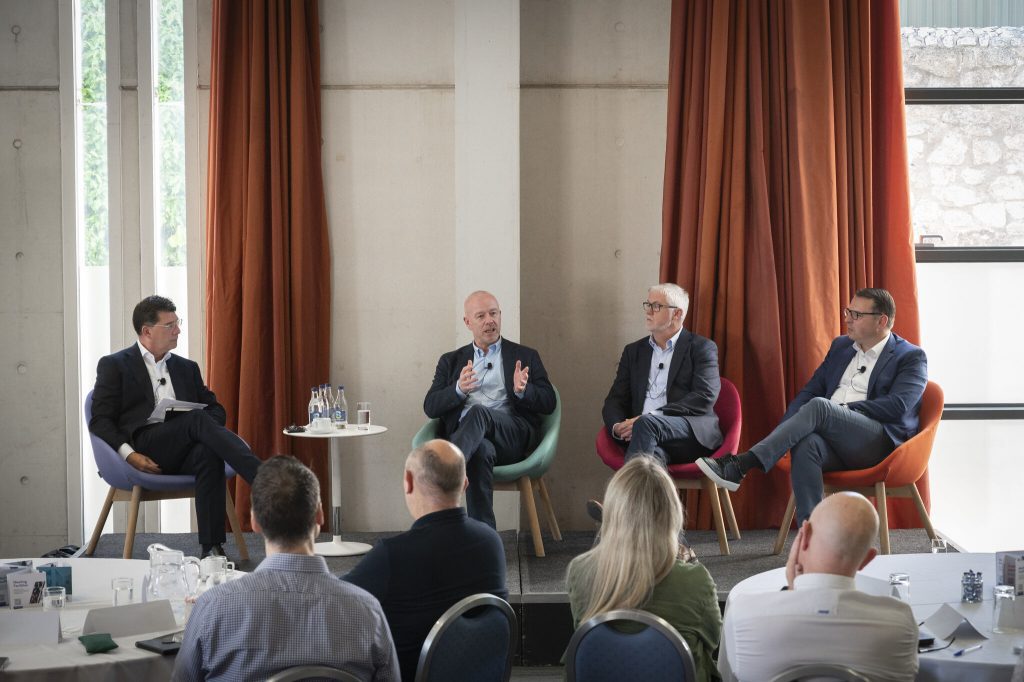
Yet during a recent IMI masterclass for corporate members, neuroscientist and bestselling author Friederike Fabritius asked: what if removing too much effort from work comes at a cost? What if some of the very experiences we are optimising away are the same experiences that develop expertise, judgement, creativity and learning?
“Everything you offload to AI and that your brain doesn’t get to do anymore can make you a little bit more stupid over time,” said Fabritius.
It’s not so much that AI will replace human intelligence, or anything apocalyptic. In fact, no matter how many op-eds or blogs Sam Altman or Dario Amodei publish in that vein, the most terrifying AI-related risk is potentially staring us in the face: what happens to us, and our brains, when we gradually stop exercising our human intelligence?
The Hidden Value of Friction
In business, friction and inefficiency are often treated as the enemy.
Understandably, we want faster decisions and shorter meetings and streamlined workflows and fewer obstacles between a problem and its solution. And yes, AI excels at precisely these things.
But neuroscience suggests that not all friction is bad.
According to Fabritius, the brain develops through challenge. Learning, adaptation and growth occur when we are slightly stretched beyond our current capabilities, not when everything is effortless. The optimal learning zone is neither boredom nor being totally overwhelmed, but what Fabritius describes as being “slightly overchallenged,” with research suggesting that a success rate of roughly 85%, coupled with around 15% mistakes, creates the ideal conditions for growth.
Interestingly, this presents a dilemma for leaders. With AI increasingly capable of conducting research, analysing information and generating ideas, it removes many of the cognitive challenges through which people traditionally developed expertise.
Efficiency increases, but what is the opportunity cost? Especially if our capabilities are not increasing at the same rate.
But Not All Friction Is Created Equal
Fabritius used an exercise designed to overwhelm the prefrontal cortex, the part of the brain involved in reasoning, planning, self-control and working memory.
Participants had to count in sequence while navigating several rules involving the number seven. When certain numbers appeared, they had to remain silent, perform a physical movement and reverse direction.
Unsurprisingly, this simple exercise unravelled almost immediately.
The brain’s capacity for conscious thought is finite. Working memory can only hold a small amount of information, attention is easily disrupted and performance deteriorates when cognitive demands become excessive.
But Fabritius challenged the assumption that those limitations are simply defects waiting to be corrected by technology:
“Your cognitive limits are a feature of your brain, not a problem,” she said.
Forgetting, filtering and taking mental shortcuts are part of how the brain remains flexible and conserves energy. Instead of trying to eliminate cognitive limits, technology should be used where those limits genuinely obstruct rather than support human performance.
Fabritius described creating an AI agent to process the relentless stream of messages and schedules generated by family life. After all, there is little developmental value in memorising a rotating, colour-coded school timetable, while processing hundreds of routine emails doesn’t make someone a better strategist. When technology removes this kind of friction, it can free attention for more “meaningful” work.
But some forms of friction force us to analyse information, structure an argument, test an assumption or recover from a mistake. They can feel inefficient precisely because learning itself is inefficient.
Organisations, and individuals, therefore need to distinguish between cognitive burden and productive difficulty.
“Choose what you want to be good at and accept that this may come at the cost,” said Fabritius, “Because we can’t be on all day long, good at everything, excel at everything.”
Cognitive burden consumes attention without building a capability we value, while productive difficulty requires effort but helps develop knowledge, judgement and expertise.
The distinction, of course, is not always obvious. A task can be tedious and still be formative. Equally, a task can appear intellectually demanding while adding little beyond cognitive clutter. So when it comes to using AI to make work easier, leaders need to be hyper-focused on this distinction to ensure removing work does not mean removing something through which that person was learning to think, notice or decide.
The Difference Between Knowing and Learning
Accelerated by our complex relationship with AI, one of the most important distinctions emerging in recent years is the difference between access to information and genuine learning.
Answers, whether accurate or not, have never been easier to obtain. A question that once might have required hours of research can now be “resolved” in seconds (this partly overlooks the even thornier debate about the veracity of AI-generated answers).
However, learning has never been about information alone. Learning, Fabritius reminded us, is fundamentally an emotional and biological process. The brain strengthens neural connections through practice and repetition and novelty and reflection. It’s not enough to ‘see’ the answer; the brain must engage with the problem.
Fabritius’ “Ten Laws of Learning” include principles such as “Use It or Lose It”, building movement into learning, protecting sleep, embracing challenge and creating emotional connection to the material.
Simply consuming AI-generated outputs doesn’t necessarily develop capability. In fact, the more we outsource certain activities, the less proficient we may become at them ourselves.
The human brain actually changes in response to what it repeatedly does.
London taxi drivers are an oft-cited example. Learning the city’s immensely complex network of streets was associated with changes in the hippocampus, a region of the brain involved in memory and spatial navigation. Their brains physically adapted to the demands placed upon them.
The reverse also applies. Rely exclusively on GPS, for example, and our spatial navigation may weaken. Skills we cease to exercise are unlikely to remain unaffected indefinitely.
“Whatever you are using on a daily basis is going to shape the brain you have today,” said Fabritius. “Use it or lose it.”
Take writing, as another example. Beyond being a communication tool, writing is also a thinking tool. The process of structuring an argument and synthesising information and articulating a position helps sharpen judgement.
“If you stop writing because AI does it for you,” said Fabritius, “Your ability to write will decrease. And writing helps us to structure our thinking.”
But, crucially, the distinction isn’t simply between writing with AI and writing without it. A leader who interrogates an AI-generated argument, tests its assumptions and rewrites its conclusions is still thinking. A leader who accepts it and circulates the first plausible response probably isn’t.
When one attendee at the masterclass described spending considerable time challenging and correcting AI-generated work, Fabritius agreed that this actually still counted as cognitive exercise:
“In my opinion, it does count if it feels a bit hard and you’re really thinking,” she said.
When Judgement Becomes Competitive Advantage
AI doesn’t eliminate the need for expertise. If anything, it makes expertise more valuable. As access to AI tools becomes increasingly widespread, access to information ceases to be a differentiator and competitive advantage shifts elsewhere.
Arguably, it shifts to judgement.
Fabritius explored what neuroscientists call expert intuition: the ability to recognise patterns and make effective decisions based on years of accumulated experience. Far from being irrational, these judgements are often rooted in extensive subconscious pattern recognition developed through repeated exposure to similar situations.
This is also known as “gut instinct,” but perhaps not as we usually understand it.
While intuition should never replace evidence (and realistically we shouldn’t be treating them as opposing camps), dismissing it entirely ignores the reality that expertise leaves a neurological imprint. Years of experience allow experts to identify patterns that are difficult to articulate but no less valuable. In fields ranging from leadership and strategy to medicine and elite sport, experience often enables people to see what others miss.
AI can support this process, but AI cannot develop those instincts on our behalf. Instead they are built through years of learning and reflection and mistakes and lived experience.
“The gut feeling you get is not just some random gut feeling,” said Fabritius. “It’s based on years and years and years of experience.”
Expertise also affects how effectively someone can use AI.
An experienced leader or subject-matter expert can (hopefully) recognise an implausible answer or identify what is absent from an analysis or ask a better follow-up question/prompt. Whereas a novice may accept the same output precisely because it sounds fluent and authoritative.
AI will always produce errors. While that isn’t ideal, the even thornier problem is that recognising these errors often depends on knowledge the user must already possess. In that sense, AI doesn’t democratise expertise quite as neatly as sometimes claimed, but arguably places an even greater premium on it.
This points towards the organisations that gain the most from AI are unlikely to be those with the largest tech budgets, but those with the strongest foundations of learning, judgement and professional knowledge.
The Leadership Development Challenge Nobody Is Talking About
Historically, developing leaders learned through doing. This is less about report writing, analysing information or other task-related activities and more about the lived experience of how they solved problems and made mistakes and refined their judgement through repetition and experience.
Increasingly, AI plays a significant role in performing many task-related activities, if not outsourcing them completely (e.g. information analysis). This may create enormous productivity gains – again, there is a debate to be had in terms of how big these productivity gains actually are – but it also raises a challenge: if future leaders are no longer carrying out tasks through which previous generations developed expertise, how will they build the judgement required to lead effectively?
Put another way, if AI performs more of the apprenticeship work, how will the next generation acquire the expertise needed to supervise it? The solution cannot be to preserve inefficient or tedious work simply because previous generations endured it (there is a reason we no longer have typists and typing pools, after all). But neither can organisations assume that judgement will somehow appear after the underlying practice has disappeared.
This challenge extends so far beyond artificial intelligence and reaches into talent development, succession planning and leadership education.
If we accept that organisations who ignore AI entirely may struggle to remain competitive, questions remain around how we can ensure employees continue to develop the capabilities that AI cannot develop for them. Leadership development, for example, may therefore have to become more deliberate.
An analyst might use AI to surface alternative interpretations but still be required to defend a final recommendation. Someone preparing a board paper might critique an AI-generated draft rather than simply use AI to produce one. The objective isn’t to keep people busy, rather it’s to ensure they continue practicing the capabilities the organisation will later expect them to possess.
This will also require organisations to distinguish between assignments that are primarily transactional from those that are developmental, and the line may not always be clear, e.g. a seemingly inefficient task that still provides exposure to customers or forces a leader to confront ambiguity. Automating it without understanding its developmental function – provided there is one – could solve an immediate productivity challenge while creating a longer-term capability gap.
It also means reconsidering how AI productivity is measured. If success is defined solely by how quickly a task is completed, organisations may miss what employees are no longer learning while completing it.
The Same AI Tool Can Have Different Consequences
There is another complication here: the same use of AI may augment an expert while undermining the development of a novice.
An experienced leader or subject-matter expert already has years of accumulated patterns against which to test an output. They are more likely to notice what is implausible, incomplete or contextually wrong. For them, AI can accelerate work without necessarily replacing the underlying judgement.
A developing employee is in a different position. The research, drafting, analysis and mistakes being removed may be the very experiences through which that judgement would otherwise have formed.
“If you’re responsible for a team, or maybe for an entire organisation, you need to treat beginners’ brains different than expert brains,” said Fabritius.
That presents a challenge to one-size-fits-all approaches to AI adoption. Organisations cannot assume that because a tool helps an established expert, it will have the same developmental effect on someone at the beginning of a career.
So instead of thinking about what tasks should be automated, it is for whom, at what stage of their development, and with what safeguards around the learning they still need to do?
Choosing What to Outsource
Fabritius, of course, is not anti-AI. Throughout the session, she described how she personally uses AI to reduce administrative burden, manage information overload and reclaim time for higher-value activities while reducing cognitive clutter.
It’s an example of why there should be no debate around AI versus human intelligence. Instead, organisations should be asking a more nuanced question like: what should we outsource, and what should we continue to practise?
Perhaps there are three broad categories worth considering, even if the boundaries between them will never be entirely clean.
- Work worth outsourcing: repetitive administration, routine coordination and low-value information processing that consume attention without developing a capability the organisation values.
- Thinking worth augmenting: research, analysis, writing and problem-solving where AI can broaden the evidence or alternatives available, but people remain responsible for interpretation, judgement and the eventual outcome.
- Capabilities worth practising: critical thinking, strategic reasoning, communication and difficult leadership conversations, where the process itself forms part of the capability.
The distinction is between using AI to expand thought and using it to avoid thought. There is no particular virtue in retaining every skill that existed before AI (think of aforementioned typists), especially when boundaries will differ across roles, individuals and organisations. The point, rather, is to decide consciously rather than allow convenience to make the decision for us
If AI becomes more capable, leaders must become increasingly intentional about identifying which capabilities they wish to preserve and develop, both in themselves and in their organisations.
Towards the end of the session, Fabritius gave the room one verbal instruction while demonstrating a different physical movement. Participants initially copied the movement rather than doing what they had been told.
“People will always imitate what you do,” she said.
AI policies and training programmes clearly matter. But employees will also observe how senior leaders use the technology. Do leaders challenge outputs or circulate them uncritically? Do they disclose where AI has been used? Do they continue to read, write and form their own views? Do they use the time saved to think more deeply, or simply to generate more output?
Organisations will not develop good AI judgement through policy alone. Employees will learn from the behaviour that leadership rewards and models, particularly when that behaviour conflicts with what the organisation formally says.
A Human Advantage Worth Protecting
The history of business is filled with technologies that changed how work was done. Arguably, AI is different because it changes not only how work is performed, but also how people learn and think and develop expertise.
This presents both an opportunity and, crucially, a warning.
Yes, AI can amplify capability and free people from unnecessary cognitive burden and create space for deeper thinking.
But it can also create the illusion of competence without the substance of it.
The organisations that thrive in the years ahead are unlikely to be those that automate the most, but rather those that are deliberate about preserving what makes human intelligence valuable in the first place: curiosity, judgement, learning, creativity and expertise.
As AI takes over more of the task, every leader should therefore be asking:
Which burdens are we sensibly removing, which forms of thinking are we strengthening and which human capabilities are we still deliberately practising?
If our world becomes increasingly defined by AI, those capabilities are not becoming less important. They are becoming the ultimate human advantage.
Lead AI adoption without losing what makes your people valuable
Lead in AI is a four-day programme for senior leaders. Work on a live business challenge and leave with an AI strategy, a workforce and operating model roadmap, and an adoption and change plan. Starts 2 March 2027, IMI Campus Dublin.